· Updated
Cut-Length Drift on Woven Bag Lines: Why Fixed-Length Cutting Isn't Enough
By the Reylong Engineering Team
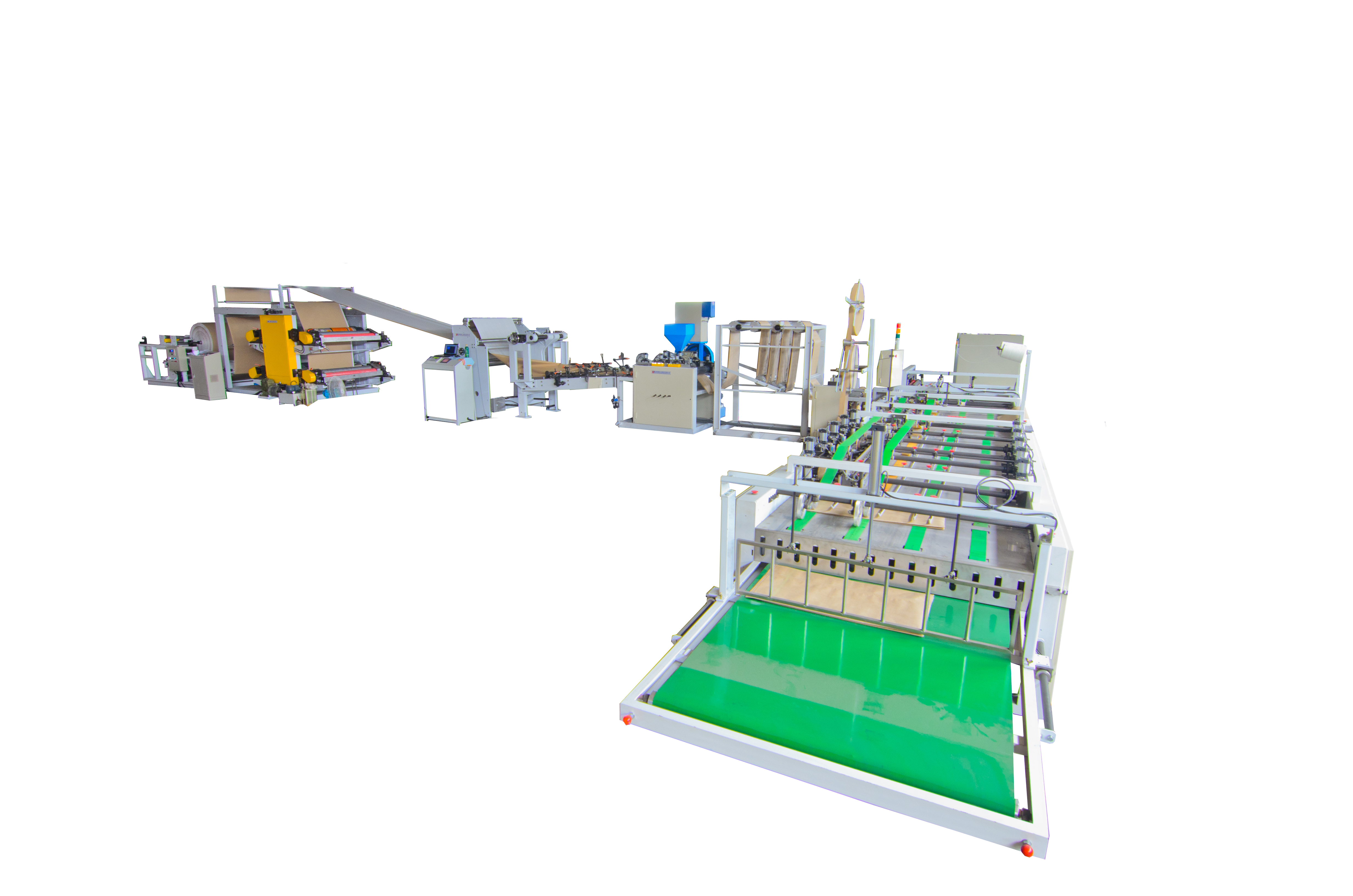
Cut-length drift on a woven bag line has one root cause: the encoder measures a steel roller that never stretches, while the knife cuts a fabric that does. The machine cuts exactly the length it measured — on a web whose length changed after it was measured — which is why bags run long at the start of a roll and short by the end while every mechanical component passes inspection. The fix is to measure the fabric itself rather than the roller, which is what Eye-Mark vision compensation does. This guide explains how to confirm the diagnosis and what accuracy is realistically recoverable.
The encoder tells you the truth about the roller, not about the fabric
Fixed-length cutting works by arithmetic. A driven roller of known circumference turns, an encoder counts the rotation, the controller multiplies, and when the product reaches the target length it fires the knife. The logic is sound and it works beautifully — on a material that does not change length.
Woven polypropylene changes length. It is a textile woven from extruded tapes, and it behaves like one: it stretches elastically under tension, it stretches by different amounts along the warp and across the weft, and how much it stretches depends on how hard it is being pulled at that moment. So the fabric passing over the roller is not the same length as the roller's circumference times its rotations. The encoder is not lying — it is faithfully reporting the roller's reality, which has quietly stopped being the fabric's reality.
This is why cut-length drift is so resistant to mechanical troubleshooting. You can replace the encoder, re-tune the servo, and sharpen the knife, and the drift will still be there, because none of those parts is where the error is being introduced.
Two numbers that look contradictory, and are not
The JLPTCSM-1300W conversion line specifies a cutting accuracy of 1 mm. Rey Long's AI documentation describes conventional fixed-length cutting drifting by roughly ±5 mm. Both are true, and the distinction between them is the whole point of this guide.
The 1 mm figure is the machine's positioning capability — what the servo and knife can achieve when the fabric arrives at the length the controller believes it has. The ±5 mm figure is the real-world drift a fixed-length cut suffers once elastic fabric, changing tension and a shrinking roll diameter enter the picture. The machine is not missing its target; the target itself has moved, and nothing in a fixed-length system is watching it move.
Diagnose in this order
1. Tension profile through the roll
Start here, because this is where the drift is created. Map tension from unwind through printing, tubing and cutting — not the HMI setpoint, the actual tension. Look especially for tension that changes as the roll runs down. As roll diameter falls, inertia and the torque-to-tension relationship at the unwind both change; without taper compensation, tension climbs or falls through the roll, fabric stretch follows it, and cut length drifts with it. Bags in tolerance at the start of a roll and out of tolerance at the end is the signature of exactly this.
2. Roll-diameter compensation at the unwind
If your tension trace confirms taper, this is the control to fix before anything else.
3. Roller slip and wear
A measuring roller that slips against the fabric breaks the arithmetic at its source. Check the drive roller surface for wear, glazing and contamination, and check nip pressure. Slip produces a drift that is biased in one direction — consistently short, not randomly scattered.
4. Fabric batch variation
Denier, weave density and lamination all change how much a fabric stretches for a given tension. A line that has been stable for weeks and drifts the day a new fabric lot is loaded is not a machine problem. Compare the certificate of analysis against the lot that ran cleanly.
5. Print repeat length versus cut length
If the printed artwork and the cut are specified independently, they can disagree. On the JLPTCSM-1300W, print repeat length is adjustable from 450 to 1200 mm and cutting length from 550 to 1250 mm — confirm the job is set up so the two are consistent before hunting for a drift that is really a setup error.
Why the printed mark is the only honest ruler
Here is the insight that makes the fix obvious. The encoder is upstream of the problem: it measures a rigid steel roller that never stretches. The printed Eye-Mark is downstream of the problem — it was printed onto the fabric, it travels with the fabric, and it has therefore already experienced every bit of stretching the fabric experienced. If the fabric grew 3 mm, the mark moved 3 mm with it.
That makes the mark the only measurement on the line that tells you where the fabric actually is, rather than where the machine calculates it ought to be. Any system that wants to cut accurately on an elastic substrate has to take its truth from the material, not from a roller.
Dynamic Error Compensation: closing the loop
This is what Rey Long's Dynamic Error Compensation does, and — unlike closed-loop colour registration, which is not a deployed capability — it runs in the field today:
- Vision reads the Eye-Mark on each segment as the web runs, at full line speed.
- The system calculates the real deformation of the fabric from the mark's actual position versus its expected position.
- It corrects the servo drives on the fly, so the knife and the sewing head act on where the fabric is, not where the arithmetic put it.
- The result: cutting and sewing accuracy tightened toward a ±1 mm target, against roughly ±5 mm on conventional fixed-length cutting, with scrap falling as a direct consequence — to as low as ~2%, down from ~5%, application-dependent.
- The same loop stabilises PCR recycled material, which is notoriously inconsistent to run, by adapting speed and sealing temperature in real time.
It retrofits. Inference runs on edge hardware at the machine — no cloud dependency, no network latency, and the line keeps running if the network does not — and it integrates over OPC-UA, Modbus and MQTT onto equipment you already own. The vision models deploy few-shot, reaching a working baseline from as few as around 50 reference samples.
The short version
Cut-length drift on woven PP is not a knife problem, an encoder problem or a servo problem. It is a measurement problem: the machine is measuring a roller that cannot stretch while cutting a fabric that can. Fix the tension profile first — particularly the taper through the roll — because that is where the stretch is created. Then, if the tolerance you need is tighter than an open-loop system can hold on elastic fabric, stop measuring the roller and start measuring the mark that rides on the material itself.
Talk to Rey Long's engineering team about retrofitting Eye-Mark compensation onto your line.
Frequently asked questions
Why does cut length drift on woven bag lines?
Because the encoder measures the roller, not the fabric. A fixed-length cutting system counts how far a driven roller has turned and fires the knife at the calculated distance. That is only correct if the fabric travelling over the roller has the same length as the roller's circumference times its rotations — and woven PP does not. It is a textile: it stretches under tension, it stretches differently along warp and weft, and the stretch changes as tension changes through the roll. The encoder faithfully reports the roller's truth while the fabric quietly tells a different one, and the bags come out long or short.
What is Eye-Mark compensation and how does it work?
It closes the loop that a bare encoder leaves open. A printed Eye-Mark travels with the fabric, so unlike the roller it has already experienced whatever stretching the fabric experienced. Rey Long's Dynamic Error Compensation uses a vision system to read the Eye-Mark on each segment, calculate the real deformation of the running web, and correct the servo drives on the fly — so the knife fires where the fabric actually is rather than where the encoder's arithmetic says it should be. It tightens cutting and sewing accuracy toward a ±1 mm target against roughly ±5 mm on conventional fixed-length cutting, and drives scrap down as a direct consequence. The same control loop also stabilises hard-to-run PCR recycled material by adapting speed and sealing temperature in real time.
Why does cut-length drift get worse as the roll runs down?
Because unwind tension is hard to hold constant across a changing roll diameter. As the roll empties, its inertia and the relationship between unwind torque and web tension both change. If that taper is not compensated, tension climbs or falls through the roll — and since fabric stretch is a function of tension, the amount the fabric is being stretched changes with it. The signature is unmistakable once you know it: bags that are within tolerance at the start of a roll and out of tolerance by the end. If you see that pattern, investigate unwind tension taper before you suspect the knife, the encoder or the servo.
Are print registration and cut-length drift the same problem?
They share a root cause but they are not the same fault, and conflating them leads to the wrong fix. Both originate in the same place: woven PP stretches, so the web is not the length the machine assumes. But registration drift is a colour-to-colour alignment error within the printed image, while cut-length drift is a length error between the image and the knife. They are also at very different stages of automation at Rey Long. Cut-length drift is corrected today by a closed vision-to-servo loop (Eye-Mark compensation). Colour registration is currently detected and flagged to the operator by the CNN vision system — closed-loop correction of registration is not a deployed capability.
Can Eye-Mark compensation be retrofitted onto an existing machine?
Yes — that is the design intent. Rey Long's AI-Powered Machine Intelligence is built to integrate onto machines you already own rather than requiring a full line replacement, and it connects over standard industrial protocols: OPC-UA, Modbus and MQTT. Inference runs on edge hardware installed at the machine rather than in the cloud, so decisions are made in real time with no network latency and the line keeps running if the network does not. The vision models deploy few-shot, reaching a working baseline from as few as around 50 reference samples, so commissioning does not require months of data collection first.