Non-Ferrous Metal Recycling Trends to Watch in 2026
By the Reylong Engineering Team
The world generated 62 million tonnes of e-waste in 2022 — and only 22.3% of it was formally collected and recycled. By 2030, that volume is projected to reach 82 million tonnes, a 32% increase, according to the UN's Global E-waste Monitor 2024. For recyclers and metal-recovery operators, that gap between what's generated and what's actually recovered is not a problem to manage — it's the market. A few clear trends are shaping how non-ferrous metal recovery equipment gets specified and bought going into 2026.
1. E-waste volume is outpacing recycling capacity
In 2022 alone, an estimated USD 62 billion worth of natural resources embedded in e-waste was trashed without being reclaimed, according to the ITU. That represents copper, aluminum and other non-ferrous metal sitting in landfills and informal waste streams rather than coming back through a separation line. As generation keeps climbing faster than recycling infrastructure, the bottleneck is shifting from "not enough e-waste to process" to "not enough separation capacity to process it with."
2. Regulation is turning recycled content from a preference into a requirement
The EU's Critical Raw Materials Act, in force since May 2024, sets binding targets for 2030: at least 25% of the EU's annual consumption of critical raw materials must come from recycling, with no more than 65% sourced from any single non-EU country. Member states are required to improve collection of critical-raw-material-rich waste and invest in the recovery capacity to process it. For processors selling into or supplying EU markets, "we can recover more metal per tonne of feedstock" is moving from a cost-saving pitch to a compliance requirement.
3. Multi-stage separation is becoming the baseline, not an upgrade
As feedstock gets more complex — mixed e-waste, multi-material consumer plastics, shredded cable scrap — a single separation stage stops being enough to hit purity targets. Ferrous metal has to come out before non-ferrous metal can be recovered cleanly, which is why standalone magnetic drums are increasingly being specified alongside, or replaced by, integrated lines that combine ferrous removal and eddy current recovery in one continuous pass. Buyers are asking for a line, not a single machine.
4. Retrofit over rebuild
Adding metal-recovery capacity to an existing plastics recycling or shredding line is a much faster path to return than building new capacity from scratch — it converts an existing contamination problem (metal fragments mixed into a plastic stream) into two saleable outputs (clean plastic and recovered metal) without a new building or a new permit. That capital-efficiency logic is why compact, easily-integrated separator lines are increasingly the more common purchase over new stand-alone plants.
How Reylong fits
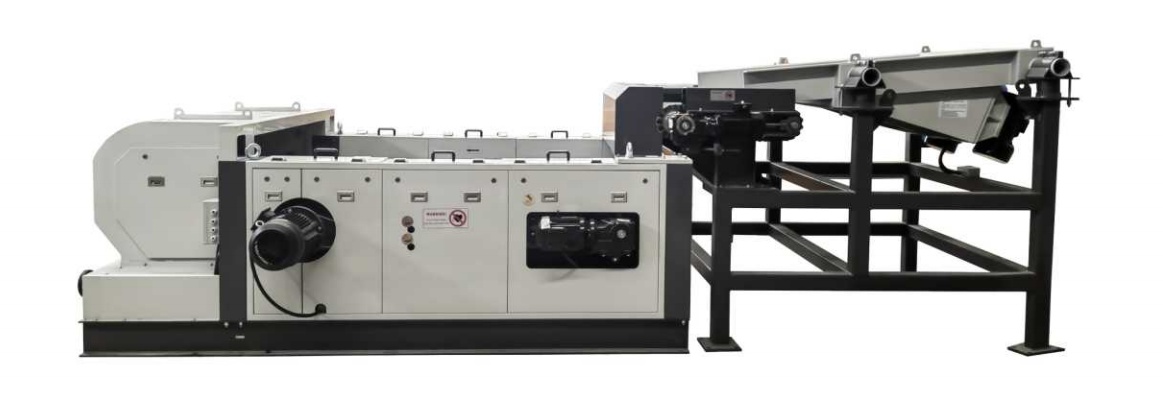
Reylong's JLECS-1000W Eddy Current Non-Ferrous Metal Separator Line is built around exactly this three-stage logic: a vibratory feeder for even material distribution, a high-intensity magnetic drum to pull out ferrous metal first, and an eddy current magnetic roller to recover non-ferrous metal — aluminum, copper, brass — from what's left. It handles particle sizes from 5–200 mm at up to 1,000 kg/h, with a compact footprint sized for retrofitting into an existing recycling or e-waste line rather than requiring a new facility.
Talk to Reylong's engineering team about integrating non-ferrous metal recovery into your recycling line.
Related reading
- What Is Eddy Current Separation? Recovering Non-Ferrous Metals from Recycling Lines
- Mono-Material Recyclable Pouches: Solving the Heat-Seal Challenge
Frequently asked questions
What's driving the growth in non-ferrous metal recovery equipment in 2026?
Two forces converging. E-waste volumes are rising much faster than recycling capacity — the UN's Global E-waste Monitor 2024 puts 2022 generation at 62 million tonnes, on track for 82 million tonnes by 2030, with only 22.3% formally recycled. At the same time, regulation increasingly treats recycled content as a requirement rather than a preference: the EU's Critical Raw Materials Act sets a 25% recycling target for critical raw materials by 2030. Both push processors toward equipment that recovers more metal per tonne of feedstock, not just equipment that processes more tonnes.
Why are recyclers retrofitting eddy current separation onto existing lines instead of building new plants?
Capital efficiency. An eddy current separator line bolts onto an existing plastics recycling or e-waste line — it doesn't need a new building or a new facility permit, and it pays back quickly because it turns a contamination problem (metal fragments mixed into the plastic stream) into two separate revenue streams (clean plastic and recovered metal) almost immediately. That is a faster path to return than building new capacity from scratch, which is why compact, easily-integrated lines have become the more common purchase over stand-alone new plants.
What's the practical difference between magnetic separation and eddy current separation?
Magnetic separation — a magnetic drum — removes ferrous metal (iron and steel) because it's attracted to a magnet. Eddy current separation removes non-ferrous metal (aluminum, copper, brass), which isn't magnetic at all; instead, a rapidly alternating magnetic field induces currents inside the metal that create a repelling force, physically flinging it away from the non-metallic stream. Because the two technologies target different metals, most modern separation lines run both stages in sequence — magnetic drum first to remove ferrous, eddy current roller second to recover non-ferrous — which is exactly how Reylong's JLECS-1000W is configured.