· Updated
Heat Seal Failures in Pouch Production: A Diagnostic Guide
By the Reylong Engineering Team
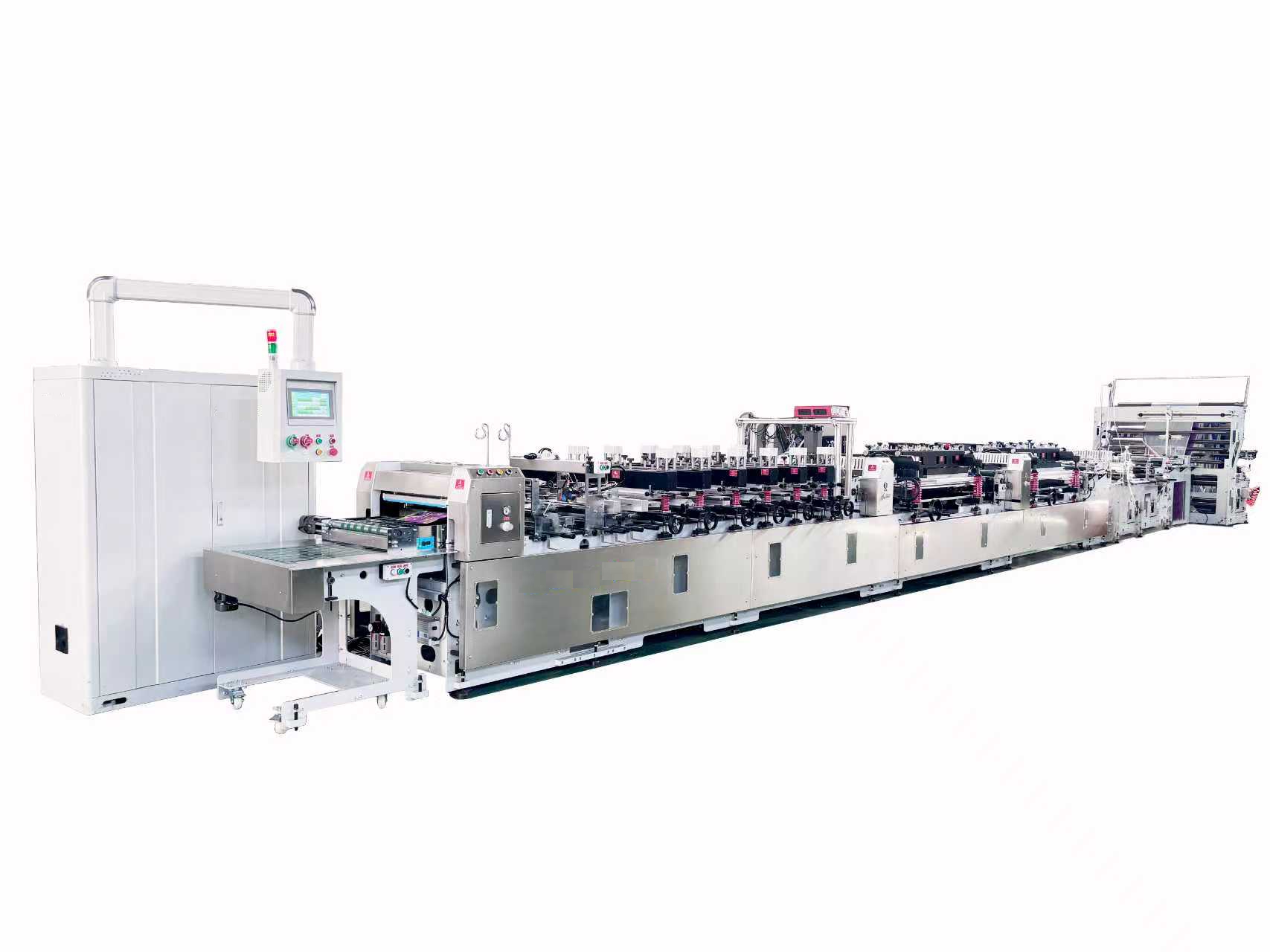
When heat-seal strength fails, the fault is one of four distinct modes: a false seal (the layers touched but never fused), burn-through (the laminate was destroyed at the seal), a channel leak (a pleat or contamination bridges the seal), or a random weak seal (a process variable is drifting shift to shift). Each mode points to a different fix, so read the failure mode first and only then start turning dials. This guide covers how to tell those modes apart, the order to work through the causes, and how the JL-L-2TZP600 is built to keep the seal inside its window at speed.
The three variables, and why they are not independent
A heat seal is made by three things acting together: temperature, pressure, and dwell time (how long the film is held between the bars). Almost every seal problem in production is a broken balance between them.
The practical consequence gets forgotten constantly: dwell time is a function of line speed. Push a machine from 120 to 180 pcs/min and you have cut the dwell time by a third without touching a temperature setting. The recipe that sealed perfectly last week is now under-sealing, and the operator who "didn't change anything" is telling the truth. Raise the temperature to compensate and you march toward the opposite failure. Every seal recipe is valid at a speed, on a film. Change either and it needs re-validating.
Read the failure mode before you touch a setting
Four modes, four different investigations:
- False seal — looks sealed, peels apart with almost no force, or leaks in the field. The layers fused cosmetically at the surface without full interdiffusion across the interface. Points to: temperature too low, dwell too short, or contamination.
- Burn-through, thinning, wrinkling — the seal is glassy, thinned, shrunken, or holed. Points to: too much energy. Temperature too high, dwell too long, or excessive pressure squeezing molten polymer out of the seal.
- Channel leak — the seal is strong everywhere except one narrow path that lets air or product through. Points to: contamination in the seal area, or a wrinkle folded into the seal before the bars closed. This is a web handling fault, not a temperature fault, and turning up the heat will not fix it.
- Random, intermittent weak seals with no pattern — the one that wastes the most time. Points to: inadequate cooling (see below), unstable temperature control, or worn PTFE tape on the bars.
Diagnose in this order
1. Measure the actual bar temperature — do not trust the HMI
The number on the touch screen is a setpoint, not a measurement of the film. A drifting thermocouple, a failing heater cartridge or a loose connection can leave the real bar surface tens of degrees from where you think it is. Measure the bar surface directly, across its length, and check both bars. An asymmetric temperature profile along the bar produces seals that are strong at one end of the bag and weak at the other — a pattern people often misread as a pressure problem.
2. Recalculate dwell time against your current speed
If the problem appeared after a speed change, stop here; you have almost certainly found it. Restore the old speed and confirm the seal recovers before you go looking for anything else.
3. Pressure and bar parallelism
Check the closing force and, more importantly, that the bars are parallel. A bar that closes even slightly out of parallel puts more pressure on one edge of the seal than the other, and you get exactly the strong-end/weak-end pattern described above. Excessive pressure is its own fault mode: it thins the seal by displacing molten polymer, so a seal can be simultaneously over-pressured and weak.
4. Cooling — the step that gets under-specified
A seal has very little strength while it is still hot. That property is hot tack, and on a high-speed machine it is the property that decides whether the bag survives. Within a fraction of a second of leaving the seal bar, the bag is indexed forward under servo tension; if the bond has not been re-solidified under pressure, it is pulled apart or distorted while still molten. This is the classic source of "random" weak seals that no amount of temperature tuning fixes, because the temperature was never the problem.
5. Film structure and batch variation
Only after the machine is cleared should you suspect the material. Sealant layer thickness variation, a resin change the supplier did not flag, moisture in a hygroscopic layer, or a laminate delaminating under heat will all present as a seal fault. Ask for the certificate of analysis of the failing batch and compare it to a batch that ran cleanly.
6. The mechanical causes people forget
Worn or damaged PTFE tape on the seal bars is the most common overlooked cause: it creates hot spots, sticking, and inconsistent heat transfer, and it degrades gradually so nobody notices the day it started. Also check for build-up on the bars, and for product powder blowing into the seal area from the filling side — a contamination path that produces intermittent channel leaks and looks maddeningly random until you find it.
How the JL-L-2TZP600 holds the seal window at speed
The machine is built so that the sealing physics above are controlled rather than hoped for:
- 4 groups of heating bars + 2 groups of cooling bars for each seal, both vertical and horizontal. The cooling groups re-solidify the bond under pressure before the bag releases — directly addressing the hot-tack failure that causes "random" weak seals.
- Progressive multi-stage heating across those 4 heating groups, so energy builds gradually into the film rather than being dumped in at one bar.
- Temperature range up to 300 °C, covering retort-grade structures, on heat-seal laminated films such as NY/PE, PET/PE and AL/PE at 30–180 µm.
- Full-servo motion with ≤0.3 mm positional accuracy, reading registration marks with photo-eye sensors, so the seal lands where the artwork says it should — a seal in the wrong place is a seal failure too.
- Ultrasonic zipper sealing. A plastic zipper has far more thermal mass than 30–180 µm film; heat-sealing it distorts the interlocking profile. The machine bonds the 13 mm zipper with ultrasonic energy generated only at the bond interface, avoiding the external heat that would wreck the surrounding wall.
- 35–220 pcs/min depending on bag style — and, per the dwell-time point above, a seal recipe validated at the speed you actually run.
Mono-material narrows the window you are working in
Everything above gets harder as the industry moves to recyclable mono-material structures. In a PET/PE laminate the sealing layer and the structural layers melt at very different temperatures, giving a wide band in which the inside fuses and the outside holds its shape. In an all-PE or all-PP film there is no such margin: the temperature that seals sits close to the temperature that destroys. Drift that a conventional laminate would absorb without complaint now produces a false seal or a burn-through.
The capability that matters for mono-material is therefore not peak temperature — it is temperature stability and cooling capacity. We look at that shift in more detail in Mono-Material Recyclable Pouches: Solving the Heat-Seal Challenge.
The short version
Identify the failure mode before you change a setting. If the fault arrived with a speed change, it is dwell time. If seals are randomly weak with no pattern, look at cooling and at the PTFE tape before you look at temperature. If the seal leaks through one narrow channel, stop adjusting heat and go find the contamination or the wrinkle. And measure the bar — the HMI is telling you an intention, not a fact.
Talk to Rey Long's engineering team about running your film structure on the JL-L-2TZP600.
Frequently asked questions
What are the three variables that control heat seal quality?
Temperature, pressure and dwell time. They are not independent knobs — they trade against each other, and that is the single most useful fact when diagnosing a seal failure. If you raise line speed, dwell time falls, and the same temperature that sealed correctly yesterday now under-seals. If you raise temperature to compensate for short dwell, you move toward burn-through and film distortion. A seal recipe is a balance of all three at a given speed, on a given film. Change any one of them and the other two need re-validating.
Why does a seal look perfect but still leak?
That is a false seal, and it is the most expensive failure mode because it passes visual inspection and fails at the customer. The sealing layers were pressed together and cosmetically fused at the surface, but never reached full molecular interdiffusion across the interface — so the bond has almost no strength and opens under load or over time. The usual causes are temperature slightly too low, dwell time too short (often after a speed increase nobody re-validated), or contamination in the seal area: product powder, dust, or oil migrating between the layers. Visual checks cannot find it. Only a destructive peel test on a seal strength tester, or a leak test, will.
What causes burn-through and wrinkling at the seal?
Too much energy into the film: temperature too high, dwell too long, or pressure high enough to squeeze molten polymer out of the seal and thin the wall. The tell-tale signs are a seal that is visibly thinned or glassy, wrinkling and shrinkage adjacent to the seal bar, and in the worst case a hole. Two mechanical causes are frequently missed. First, worn or damaged PTFE tape on the seal bar creates local hot spots and sticking. Second, the temperature at the film may not be the temperature on the HMI — a drifting thermocouple or an ageing heater cartridge can put the actual bar surface tens of degrees away from setpoint. Measure the bar surface directly before you trust the display.
How does cooling affect seal strength?
Decisively, and it is the step most often under-specified. A seal has almost no strength while it is still hot — this is hot tack, the strength of the bond before it has cooled and crystallised. On a high-speed machine the bag is indexed forward under servo tension within a fraction of a second of leaving the seal bar, so if the bond has not been re-solidified under pressure it gets pulled apart or distorted while still molten. That failure looks like random, intermittent weak seals with no pattern, which sends people hunting for a temperature fault that is not there. The JL-L-2TZP600 addresses this structurally: each seal, vertical and horizontal, uses 4 groups of heating bars followed by 2 groups of cooling bars, so the bond is re-solidified under pressure before the bag is released.
Why do mono-material films fail more often at the seal?
Because their heat-seal window is much narrower. In a conventional laminate such as PET/PE, the sealing layer and the structural layers are different polymers with very different melting points, so there is a wide temperature band in which the inner layer fuses while the outer layer stays intact and supports the bag. In a mono-material film every layer belongs to the same polymer family, so the temperature that seals the film sits close to the temperature that melts, distorts or burns through it. A few degrees of drift that a PET/PE laminate would absorb without complaint produces either a false seal or burn-through. This is why temperature stability and cooling capacity — not peak temperature — are the capabilities that matter as converters move to recyclable mono-material structures.